
The Challenge of Light
In the world of professional photography, but not only, managing contrast has always been one of the toughest challenges.
Whether I’m shooting architectural interiors or the urban alleyways I’m so drawn to, I often face scenes where lights and shadows coexist in extreme disparity.
Even with the latest technological advances, sensors still have their physical limits. That’s where HDR (High Dynamic Range) comes in. But let’s be clear: professional HDR has nothing to do with the “filters” on our smartphones.
What I’m talking about is a method to extend the camera’s ability to read light, capturing what the lens alone simply cannot synthesize, and presenting it to the human eye as it truly feels.


The Technique Behind the Vision
Technically, it all revolves around bracketing: capturing the same frame at different exposures to then fuse that data into a base image that holds every possible detail.
It isn’t about random layering, but about data architecture. The goal isn’t the excess I often see online, where potentially stunning images are ruined by heavy-handed post-processing, but balance.
It demands rigorous control over shadow noise and a surgical clean-up of the highlights. The ultimate challenge is invisibility: the final result should feel natural, as if the scene was lit by the perfect, singular intent of the author.
While many cameras handle bracketing automatically, I prefer managing each scene through individual exposures. This gives me absolute command over the high, mid, and low levels.

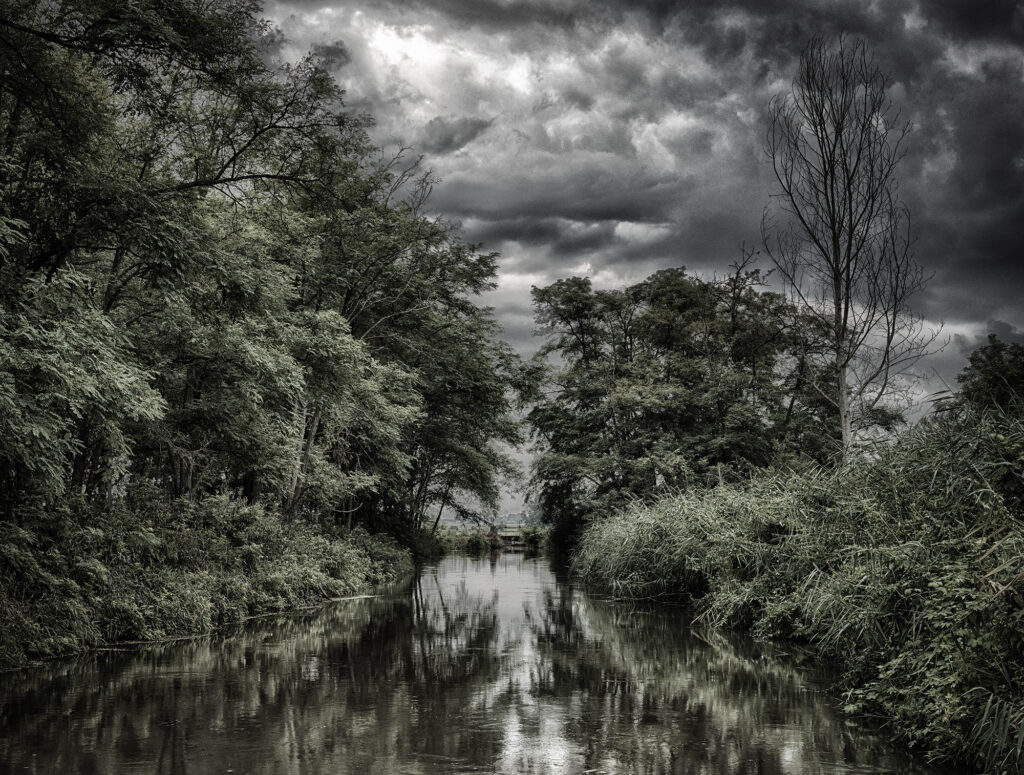

Why It Remains a Timeless Language
Even after all these years, I find this technique remains one of the most compelling ways to capture architecture and interiors. Why? Because it allows for a complete narrative of a space.
Bringing out the texture of a stone in the shadows while maintaining the clarity of a landscape through a window is how we build three-dimensionality.
In an age of synthetic imagery, having total control over dynamic range means having control over the truth of a place.

HDR, when used with genuine awareness, isn’t meant to “fix” a mediocre photo; it’s meant to give a voice to a complex vision. It’s not about artifice; it’s about the power of observation.
Mastering dynamic range is, at its heart, an act of respect for the subject: it means wanting to tell its story in its entirety, without hiding anything behind the convenience of absolute blacks or blown-out highlights.
Ultimately, HDR is still a powerful tool for honoring the visual complexity that defines a space and the light that inhabits it.
— Simone Zeffiro